Hidden Seasons

Five-week seriesHidden Seasons · Five-week series
Preaching & Teaching Guide
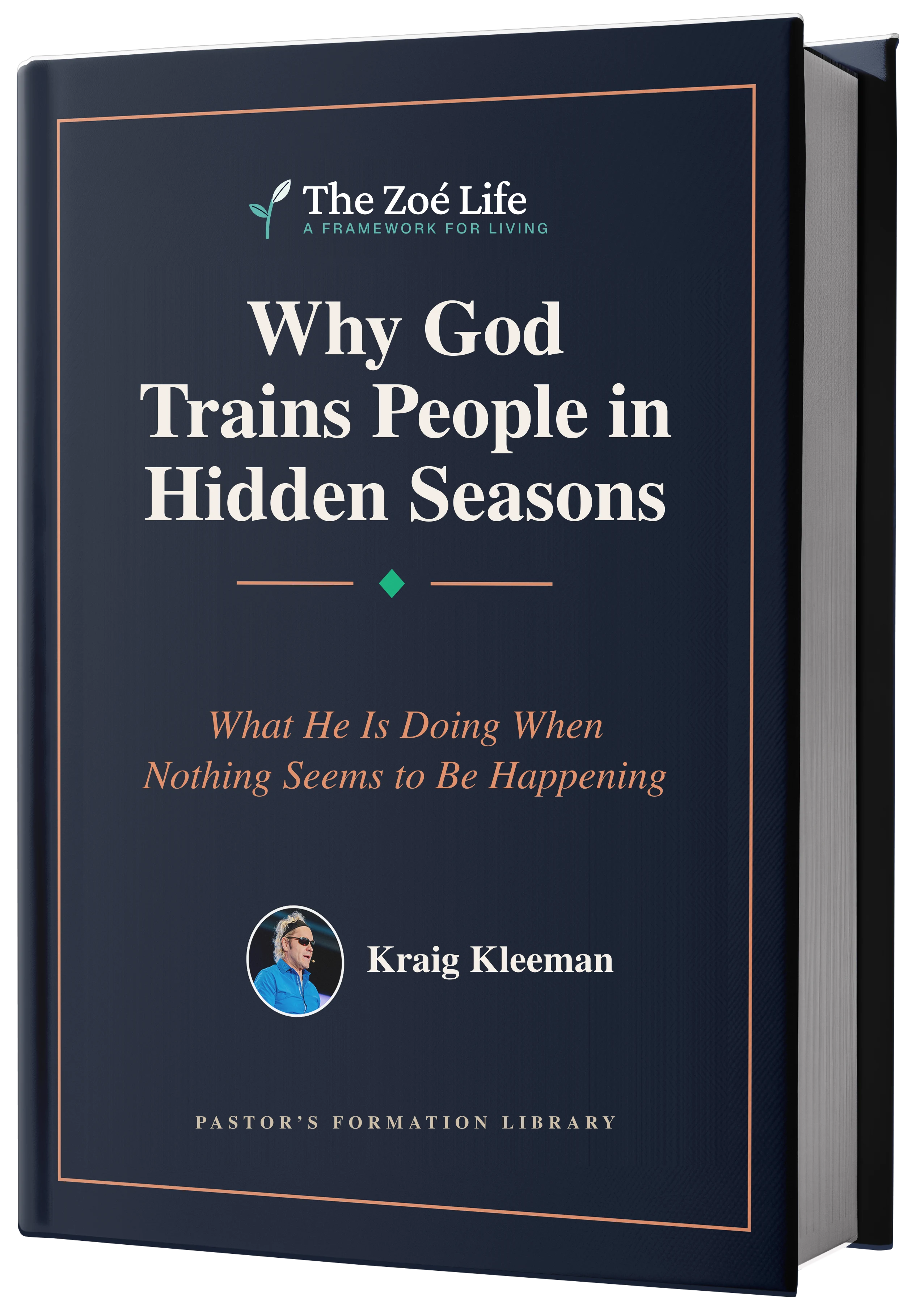
A five-week series for helping your church see what God is forming in the seasons nobody sees.
Includes slides with speaker notes, this guide as a PDF and 4 team handouts.
Start here
How are you using this book?
- Five-week seriesOne Sunday per week, from the misunderstood season to coming out formed.
- One messageA single sermon from 1 Samuel 16 that carries the whole arc.
- Class or small groupFive or six sessions of 60–75 minutes, with discussion built in.
Your first three steps
Download the Preaching & Teaching Kit
Slides, this guide and the handouts in one ZIP. Download it above ↑Read Week 1
and the book sections it lists. Go to Week 1Send your team the handouts
Each one says when to use it. See the handouts
The series
Series at a glance
- Week 1: The Misunderstood Season1 Samuel 16:7 · Hebrews 12:11
- Week 2: Obscurity and DelayExodus 3:1–10 · Psalm 27:14
- Week 3: Contradiction and IsolationGenesis 50:20 · 1 Kings 17:2–9
- Week 4: Formed Before RevealedLuke 2:51–52 · Luke 3:2
- Week 5: Coming Out FormedMatthew 7:24–27 · 1 Peter 5:6
Five Sundays, from the misunderstood season to coming out formed. Each shows the week's text and response. Select a week to jump to it.
Before the series
Planning checklist
Four weeks out
- Read the book through once, or at least Chapters 1, 2, 9, 11 and 16.
- Meet with staff or group leaders using the Team Discussion Guide, including Chapters 13–15.
- Decide who will pray with people in Week 3.
Two weeks out
- Print Reading Your Season for Week 1 and Four Portraits for Weeks 2–3.
- Print Signs a Season Is Shifting for Week 5.
- Ask two or three people whether they would share a season that looked like failure and turned out to be formation.
- Send small-group leaders the five weeks of questions.
The week of each Sunday
- Read that week's “Read before you preach” chapters.
- Choose one illustration from your own church for each prompt you use.
- Prepare a slide with the big idea and the featured line.
Before Week 3
- Arrange people to pray with anyone whose season feels like a contradiction of God's promise.
- Make sure pastoral care is available for anyone who has suffered injustice or abuse.
Chapters 1–3
Week 1: The Misunderstood Season
1 Samuel 16:7 · Hebrews 12:11
This week at a glance
- Big idea
- A season that feels like stagnation may be God's preparation. He forms before He sends, and how we name the season shapes how we walk through it.
- Prepare
- Copies of Reading Your Season for everyone, and one person ready to share a season that looked like failure at the time.
Show full outline for Week 1Hide full outline
Preach it
On the text
- 1 Samuel 16:7: “the Lord sees not as man sees: man looks on the outward appearance, but the Lord looks on the heart.” God says it while Samuel is admiring the wrong son.
- David was not even in the room. Jesse said, “There remains yet the youngest, but behold, he is keeping the sheep” (1 Samuel 16:11). The one God chose was the one his own family forgot to call.
- Hebrews 12:11 is honest about how formation feels: “For the moment all discipline seems painful rather than pleasant, but later it yields the peaceful fruit of righteousness to those who have been trained by it.”
Read before you preach
- The misunderstood seasonChapter 1
- The pattern of hidden formationChapter 2
- Why hidden seasons feel like failureChapter 3
The message
Ask the room to picture a seed in the ground in winter. Nothing shows above the soil. Ask whether that seed is failing or growing, and how anyone standing over it could tell.
God sees what others overlook. · 1 Sam 16:7 · Ch 1
Hidden formation is God's pattern. · Ch 2
Why it feels like failure. · Heb 12:11 · Ch 3
Ask a better question. · Ch 2
Hand out Reading Your Season. Give people two quiet minutes to write down how they have been naming their current season, then invite them to ask the book's question instead: “What is God forming in me right now?”
Where Jesus is in this text
Isaiah 53:2 says the Messiah “had no form or majesty that we should look at him.” Jesus Himself was overlooked by people who judged by appearance, and He was exactly who God had sent.
Lines from the book
What you call stagnation, God may call preparation.
God forms before He sends. Every time.
Illustration prompts from your own church
- A season in your own life that looked like stagnation and turned out to be preparation.
- Someone in your church who was overlooked for years and is now bearing fruit.
- A time you named a season wrongly, and how that changed the way you walked through it.
Lead the response
On Sunday
What is God forming in me?
Give everyone Reading Your Season. Invite each person to circle the assumption they have been living with, then write one sentence answering the book's question: “What is God forming in me right now?”
Take it home · For households
Ask each person at dinner: “Is there something in your life right now that feels stuck?” Listen without fixing it.
Small-group questions
- How would you describe the season you are in right now?
- Which of the four assumptions on the handout have you lived with?
- Where has God formed you in a season that felt like nothing was happening?
Bridge · Next week: Moses in the wilderness and David in the waiting, two men God formed long before anyone saw them.
Chapters 4–5
Week 2: Obscurity and Delay
Exodus 3:1–10 · Psalm 27:14
This week at a glance
- Big idea
- Moses spent forty years unseen, and David waited years between anointing and throne. God was not wasting that time. He was forming the people He would send.
- Prepare
- Copies of Four Portraits for everyone. You will use the Moses and David panels this week and the rest next week.
Show full outline for Week 2Hide full outline
Preach it
On the text
- Exodus 3:1 opens on ordinary work: “Now Moses was keeping the flock of his father-in-law, Jethro.” Stephen adds the length of it: “when forty years had passed, an angel appeared to him in the wilderness” (Acts 7:30).
- Twice David had Saul within reach and twice he refused: “The Lord forbid that I should do this thing to my lord, the Lord's anointed” (1 Samuel 24:6). Delay formed restraint in him.
- Psalm 27:14 says it twice: “Wait for the Lord; be strong, and let your heart take courage; wait for the Lord!” Waiting is not passive. It takes courage.
Read before you preach
- Moses: Formation through obscurityChapter 4
- David: Formation through delayChapter 5
The message
Tell the room that Moses was eighty when God called him at the bush. Ask how many people feel they have been waiting too long for God to use them.
Forty years nobody saw. · Acts 7:30 · Ch 4
God spoke first, at the bush. · Exod 3:2–4 · Ch 4
Anointed long before crowned. · 1 Sam 16:13 · Ch 5
Wait for the Lord. · Ps 27:14 · Ch 5
Walk through the Moses and David panels on Four Portraits. Invite people to circle the one thing from either list they most sense God forming in them now.
Where Jesus is in this text
Galatians 4:4 says, “when the fullness of time had come, God sent forth his Son.” God's greatest sending came on His timetable, not ours. The One who waited for the fullness of time is with us in our waiting.
Lines from the book
The person God calls is rarely the same person He sends.
Anointing reveals calling. It does not establish timing.
Illustration prompts from your own church
- A long season of obscurity in your own life and what God was forming there.
- Someone who refused to force what God had promised, like David with Saul.
- A time you rushed ahead of God's timing, and what it cost.
Lead the response
On Sunday
Formed in the waiting
Hand out Four Portraits and read the Moses and David panels aloud. Invite each person to circle one quality they sense God forming in them and to write the name of the season it is being formed in.
Take it home · For households
Read Psalm 27:14 together each evening this week. Ask: “What are you waiting for right now?”
Small-group questions
- Which part of Moses' three forty-year seasons feels most like yours?
- Of the four things delay formed in David, which do you most need?
- Where are you tempted to seize what God has promised instead of waiting for it?
Bridge · Next week: Joseph in the pit and the prison, and Elijah by a brook that dried up.
Chapters 6–7
Week 3: Contradiction and Isolation
Genesis 50:20 · 1 Kings 17:2–9
This week at a glance
- Big idea
- Joseph's road ran away from the promise before it ran toward it, and Elijah was hidden before he was sent back. What feels like contradiction may be preparing us to carry what God gives.
- Prepare
- Four Portraits again, and people ready to pray with anyone whose season feels like a contradiction of what God promised.
Show full outline for Week 3Hide full outline
Preach it
On the text
- Psalm 105:19 summarizes Joseph's years: “until what he had said came to pass, the word of the Lord tested him.” The promise itself was the test.
- Joseph names evil as evil and God as greater: “As for you, you meant evil against me, but God meant it for good” (Genesis 50:20). He does not pretend his brothers did nothing wrong.
- God told Elijah, “hide yourself by the brook Cherith” (1 Kings 17:3). Then “after a while the brook dried up” (17:7), and God sent him to a widow with almost nothing (17:9). Even the place God chose ran out, so Elijah learned to depend on God, not the place.
Read before you preach
The message
Read the five steps of Joseph's descent from the handout one at a time, pausing after each. Ask: “At which step would you have stopped believing the dream?”
Every step seemed to move away from the dream. · Gen 37–40 · Ch 6
The word tested him. · Ps 105:19 · Ch 6
Hidden by a brook, fed by ravens. · 1 Kings 17:2–6 · Ch 7
Public authority is built in private. · 1 Kings 17:7–9 · Ch 7
Invite anyone whose life feels like a contradiction of what God promised to stand or raise a hand, and ask those nearby to pray for them. Close by reading Genesis 50:20.
Where Jesus is in this text
Jesus was betrayed by a friend, and “they all left him and fled” (Mark 14:50). What people meant for evil at the cross, God meant for the saving of many. Joseph's story is a shadow of His.
Lines from the book
What appears to contradict the promise may be preparing you to sustain it.
Public authority is built in private dependence.
Illustration prompts from your own church
- A season that seemed to move away from what God had promised you.
- A place God provided for a time, and what you learned when it dried up.
- Someone whose quiet dependence on God gave them authority others trusted.
Lead the response
On Sunday
Praying in the contradiction
Turn to the Joseph and Elijah panels on Four Portraits. Give a minute of silence for each person to mark where they are on Joseph's road or Elijah's, then pray for those who stand.
Take it home · For households
Ask each person: “Where does something in your life seem to contradict what you hoped God would do?” Pray for each other by name.
Small-group questions
- Where are you on Joseph's road right now?
- What has God provided for a season that is now drying up?
- How might God be building something in private that you will need in public?
Pastoral note: Some in the room have suffered real injustice or abuse. Do not call what was done to them God's formation. Joseph named evil as evil; say clearly that God's purpose never excuses what others did, and point people to pastoral care.
Bridge · Next week: Paul's hidden years, John in the wilderness, and Jesus in Nazareth.
Chapters 8–10
Week 4: Formed Before Revealed
Luke 2:51–52 · Luke 3:2
This week at a glance
- Big idea
- Paul withdrew for years, John grew up in the wilderness, and Jesus spent thirty years in Nazareth. If the Son of God was formed in hiddenness, no servant is exempt. God is preparing the person before the platform.
- Prepare
- A slide of Luke 3:1–2 showing the list of rulers before “the word of God came to John.”
Show full outline for Week 4Hide full outline
Preach it
On the text
- After his conversion Paul “went away into Arabia,” and only “after three years” went up to Jerusalem (Galatians 1:17–18). The apostle to the nations began with years almost no one saw.
- Luke 1:80 says John “was in the wilderness until the day of his public appearance to Israel.” Then Luke 3:1–2 lists an emperor, a governor, rulers and high priests, and says the word of God came not to any of them but “to John the son of Zechariah in the wilderness.”
- Of Jesus' years in Nazareth, Luke says only that He “was submissive to them” and “increased in wisdom and in stature and in favor with God and man” (Luke 2:51–52). Thirty years, two verses.
Read before you preach
The message
Show the Luke 3:1–2 slide and read the list of powerful names slowly. Then read the last line: the word of God came to a man in the wilderness.
Paul's hidden years. · Gal 1:15–18 · Ch 8
John in the wilderness. · Luke 1:80 · Ch 8
Thirty years in Nazareth. · Luke 2:51–52 · Ch 9
What God forms in hidden seasons. · Ch 10
Invite people to write down one thing they sense God forming in their person, not their platform, and to thank Him for it in a minute of silence.
Where Jesus is in this text
This week is about Jesus Himself. Hebrews 5:8 says, “Although he was a son, he learned obedience through what he suffered.” He did not skip the hidden years. He sanctified them.
Lines from the book
If Jesus was formed in hiddenness, no servant is exempt.
God is not preparing your platform. He is preparing your person.
Illustration prompts from your own church
- A season you stepped back from visibility and what God formed in you there.
- Someone in your church whose faithfulness in an unseen role has shaped others.
- A time you wanted the platform before God had finished preparing the person.
Lead the response
On Sunday
Person before platform
Give each person a card. Invite them to write one thing God is forming in their character in this season, then pray together: “Lord, form me before You send me.”
Take it home · For households
Read Luke 2:51–52 together. Ask: “What do you think Jesus learned in those quiet years?”
Small-group questions
- Why do you think Scripture says so little about Jesus' years in Nazareth?
- What is God forming in your person that no platform could give you?
- Where are you tempted to rush from hidden to seen?
Bridge · Next week: how to come out of a hidden season formed, without forcing the door open.
Chapters 11–12 and 16
Week 5: Coming Out Formed
Matthew 7:24–27 · 1 Peter 5:6
This week at a glance
- Big idea
- Avoiding hidden seasons leaves a gap between gifting and character. God opens the door out of a hidden season in His time, and the mature respond to Him rather than strive.
- Prepare
- Copies of Signs a Season Is Shifting for everyone, and a prayer of sending.
Show full outline for Week 5Hide full outline
Preach it
On the text
- Both houses in Matthew 7 face the same storm: “The rain fell, and the floods came, and the winds blew and beat on that house, but it did not fall, because it had been founded on the rock” (7:25). The difference was laid where no one could see it.
- 1 Peter 5:6 says, “Humble yourselves, therefore, under the mighty hand of God so that at the proper time he may exalt you.” The humbling is ours; the timing is His.
- The next verse gives the posture for waiting: “casting all your anxieties on him, because he cares for you” (1 Peter 5:7).
Read before you preach
- The dangers of avoiding hidden seasonsChapter 11
- Hidden seasons and spiritual authorityChapter 12
- Emerging from hidden seasonsChapter 16
The message
Ask the room what a builder spends most of the time on before a tall building rises. Then point out that the foundation is the part nobody photographs.
The danger of skipping formation. · Ch 11
Two houses, one storm. · Matt 7:24–27 · Ch 12
God opens the door. · 1 Pet 5:6 · Ch 16
Respond; do not strive. · Ch 16
Hand out Signs a Season Is Shifting and read the five portraits of how God opened each door. Then send the church out with 1 Peter 5:6.
Where Jesus is in this text
Jesus “humbled himself by becoming obedient to the point of death, even death on a cross. Therefore God has highly exalted him” (Philippians 2:8–9). He did not seize exaltation. He received it from the Father.
Lines from the book
Gifting may open the door, but character determines how long it stays open.
Maturity responds. Immaturity strives.
Illustration prompts from your own church
- Someone whose gifting outran their character, told with care and without names.
- A door God opened for you after a long season, in His timing rather than yours.
- A time you strove to make something happen and what you learned when you stopped.
Lead the response
On Sunday
Respond, do not strive
Give everyone Signs a Season Is Shifting and walk through it together. Invite each person to mark one place they have been striving, then pray a prayer of sending over the church.
Take it home · For households
Ask each person: “What would it look like to wait for God to open the door instead of pushing on it?”
Small-group questions
- Where has your gifting moved faster than your character?
- What door are you tempted to force open right now?
- Looking back on this series: how has the way you name your own season changed?
Bridge · Close by reading the book's own line and let the church leave holding it: “Maturity responds. Immaturity strives.”
One-message version
“Keeping the Sheep”
1 Samuel 16:1–13
Big idea
The season nobody sees is where God forms the person He will send. Like David with the sheep, we can trust Him in the hidden years and let Him open the door.
Samuel looked at the wrong son. · 1 Sam 16:6–7 · Ch 1–3
David was out with the sheep. · 1 Sam 16:11 · Ch 4–5
The anointing came long before the throne. · 1 Sam 16:13 · Ch 5–7
What God formed in the field. · 1 Sam 17:34–37 · Ch 8–10
At thirty, in God's time, he began to reign. · 2 Sam 5:3–4 · Ch 11–12, 16
What you call stagnation, God may call preparation.
Pick one illustration from your own church for movement 2 and one for movement 4; those two carry the message. Movement 4 is where you name what God forms in hidden seasons, then give the response below before the final song.
Response
What is God forming in me?
Read 1 Samuel 16:7, then give two minutes of silence. Invite each person to write one sentence answering the book's question, “What is God forming in me right now?”, and to thank Him for the season they are in.
Class version
Teaching this as a class
Use Weeks 1–5 as five sessions of 60–75 minutes. Ask the class to read the matching chapters before each session. Every session follows the same rhythm:
Open with a story
10 min · One person shares a hidden season and what God formed in it.
Read the text
10 min · Read the week's passage aloud, then once more slowly.
Teach
20 min · Work through the week's outline and lines from the book.
Discuss
20 min · Use the small-group questions. Let quieter people answer first.
Practice
10 min · Work through the week's handout, or plan when to do it this week.
Optional session 6 · Walking with others
Read Chapters 13–15 together and use Session 5 of the Team Discussion Guide to talk about how the group will walk with others through hidden seasons.
Leadership sidebar · For staff and elders before the series
Shepherding People Through Hidden Seasons
A series on hidden seasons will surface people who feel stuck, overlooked or forgotten. Before it starts, spend one meeting with your staff or elders on Chapters 13–15 so you are ready to walk with them.
Do not try to fix what God is forming.
Recognizing hidden seasons
Can we tell when someone in our care is being formed, not simply drifting? (Ch 13)
Shepherding without fixing
Where are we tempted to rescue people from what God is forming in them? (Ch 14)
Helping leaders survive
Which of our leaders is in a hidden season now, and who is walking with them? (Ch 15)
Handouts for your team
- Staff & leadersTeam Discussion GuidePDF: download Team Discussion Guide
Staff or group leaders: read the book together before the series starts.
- PDF: download Reading Your Season
- PDF: download Four Portraits
- PDF: download Signs a Season Is Shifting
Three months later
After the series
About three months after Week 5, gather your leaders again and ask:
- How has the way our people name hard or quiet seasons changed?
- Who did we walk with through a hidden season, and what did we learn?
- Where are we still rewarding visibility more than formation?
About this guide
A guide, not a manuscript
Each week gives you a text, a big idea and an outline, then gets out of the way so you can do your own study and preach in your own voice. The best illustrations will come from the people in your church, not from this page, so the prompts point you there.
Lines marked Lines from the book are quoted word for word from Hidden Seasons, and the handouts carry the book's own charts and portraits. Everything else, including the series title, Scripture choices, notes on the text, openings, outlines, prompts, take-homes and questions, was prepared for this guide. Chapters 13–15, on shepherding others through hidden seasons, are for leaders and appear in the leadership sidebar and the Team Discussion Guide rather than in the sermons.