When Churches Remember

Five-week seriesWhen Churches Remember · Five-week series
Pastor Preaching & Teaching Guide
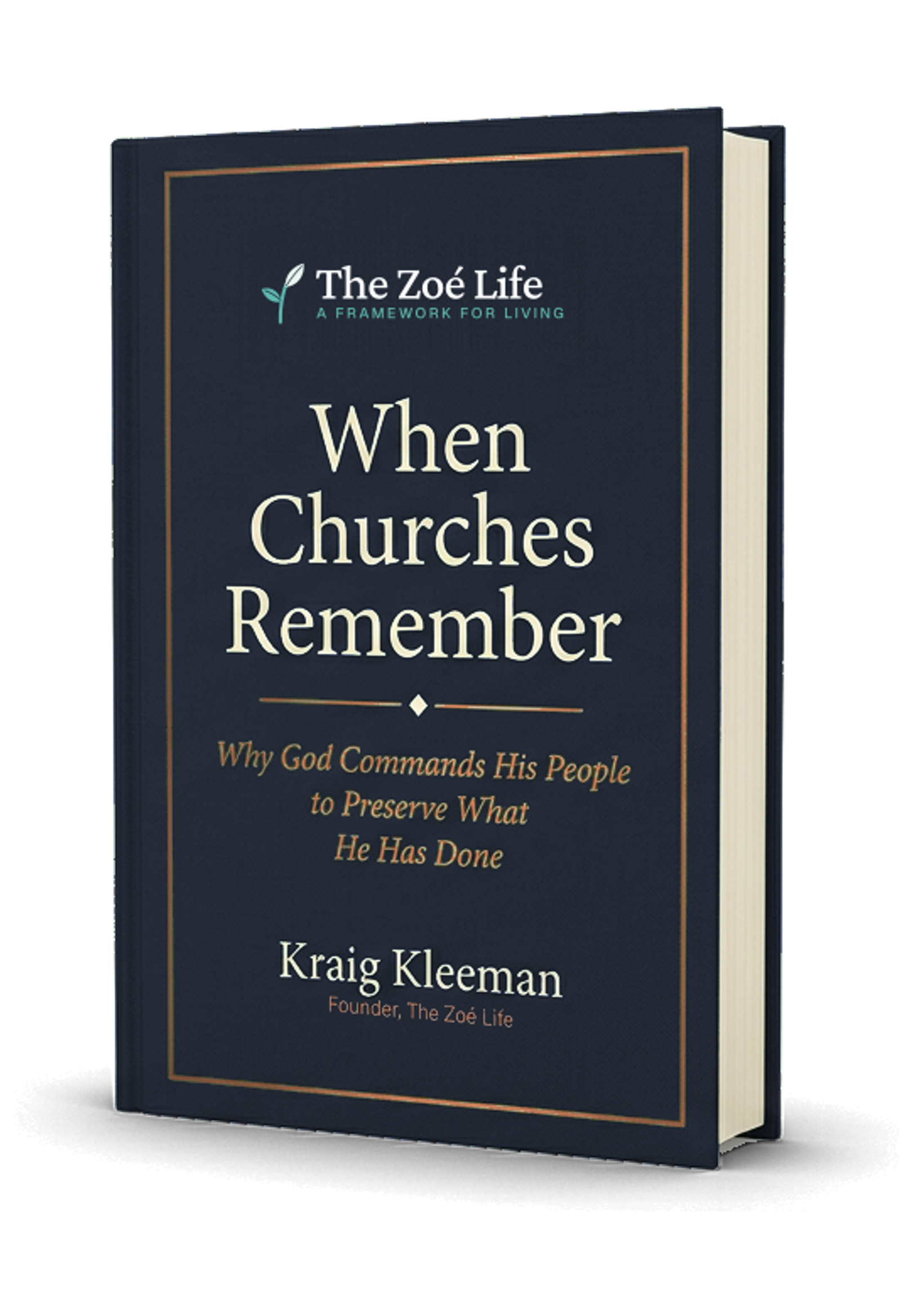
A five-week series for helping your church remember what God has done.
Includes 72 slides with speaker notes, this guide as a PDF and 3 team handouts.
Start here
How are you using this book?
- Five-week seriesOne Sunday per week, following the book's five Parts.
- One messageA single sermon from Joshua 4 that carries the whole arc.
- Class or small groupFive or six sessions of 60–75 minutes, with discussion built in.
Your first three steps
Download the Preaching & Teaching Kit
Slides, this guide and the handouts in one ZIP. Download it above ↑Read Week 1
and the book sections it lists. Go to Week 1Send your team the handouts
Each one says when to use it. See the handouts
The series
Series at a glance
- Week 1: The God Who Commands Us to RememberDeuteronomy 8:1–18 · Psalm 105:1–5
- Week 2: Build the Stones Before You Leave the RiverJoshua 4:1–24
- Week 3: When Churches ForgetJudges 2:6–13 · Psalm 106:6–13
- Week 4: Becoming a Remembering Church1 Samuel 7:3–12 · Psalm 77:11–14
- Week 5: Give the Next Generation a MemoryPsalm 78:1–8 · Joshua 4:6–7 · Luke 22:14–20 · 1 Corinthians 11:23–26
Five stones, one per Sunday, stepping toward the Table. Each shows the week's text and response. Select a stone to jump to that week.
Before the series
Planning checklist
Four weeks out
- Read the book through once, or at least the five Part openings.
- Meet with staff or elders using the leadership sidebar, and complete What Does Your Church Remember?
- Choose the one habit you will launch in Week 4, and who will carry it.
- Invite two or three people to prepare short testimonies for Week 4.
Two weeks out
- Print or buy cards for Week 1.
- Gather a basket of stones and markers for Week 2, and choose where the stones will be placed.
- Begin collecting answered prayers from the church to share in Week 4.
- Send small-group leaders the five weeks of questions.
The week of each Sunday
- Read that week's “Read before you preach” sections.
- Choose one illustration from your own church for each prompt you use.
- Prepare a slide with the big idea, the featured line and the diagram.
Before Week 5
- Confirm Communion plans with those who serve.
- Prepare a take-home card for the family meal assignment.
Chapters 1–3
Week 1: The God Who Commands Us to Remember
Deuteronomy 8:1–18 · Psalm 105:1–5
This week at a glance
- Big idea
- God commands his people to remember because a blessed people drift toward forgetting, and what we forget about God we soon credit to ourselves.
- Prepare
- Cards for every seat, so people can write down one hard season God led them through.
Show full outline for Week 1Hide full outline
Preach it
On the text
- “Remember” (Hebrew zakar) is more than recall. It means calling something to mind in order to live by it, which is why Moses pairs it so often with “do not forget.”
- Moses speaks on the plains of Moab, before the crossing. The warning is for a people about to be blessed, not a people in trouble.
- Manna (v3) came daily and could not be stored, so dependence was built into Israel's diet.
Read before you preach
- Remembering What God Has DoneChapter 1
- Remember the Whole WayChapter 2
- Forgetting Changes the StoryChapter 3
The message
Begin with something you were sure you would never forget, and did: a name, a prayer, a gift. Then read Moses telling a people on the edge of blessing that they will forget too.
God says “remember” because he knows we forget. · Deut 8:2, 11 · Ch 1
- that you were slaves.
- that the Lord brought you out.
- the wilderness.
- how He humbled you.
- how He fed you.
- that He is the One who gives you the ability to produce wealth.
Remember the whole road, not only the destination. · Deut 8:2–5 · Ch 2
Forgetting quietly rewrites the story into “my power and the might of my hand.” · Deut 8:17 · Ch 1, 3
What we remember shapes what we love and who we worship. · Deut 8:18; Ps 105:5 · Ch 3
Land on verse 18: “You shall remember the Lord your God.” Invite the church to spend this series doing exactly that, starting with their own wilderness road.
Where Jesus is in this text
In his own wilderness, Jesus answered temptation with this chapter: “Man shall not live by bread alone” (Deut 8:3; Matt 4:4). Where Israel forgot, the Son remembered, and he keeps his people now.
Lines from the book
What begins as grace can be retold as achievement.
The destination proved God's faithfulness. But so did the road.
What we repeatedly remember shapes what we repeatedly desire.
Illustration prompts from your own church
- A wilderness season in your church's life, and what God supplied along the way that nobody talks about now.
- A blessing in your own ministry that you have been tempted to retell as your own achievement. Tell it honestly and briefly.
- One “manna” story: provision that came on time, in a form nobody expected.
Lead the response
On Sunday
Remember the road
Hand out cards. Invite each person to write down one hard season God led them through, and one thing he provided in it. Collect them anonymously, or let people keep them in their Bibles for the rest of the series.
Take it home · For households
At dinner this week, have each person name one hard stretch from this year and one way God helped in it.
Small-group questions
- When you tell the story of your faith, do you usually include the wilderness parts? Why or why not?
- Where are you most tempted to say, “I did this”?
- What is one thing God did for you that you had nearly forgotten until today?
Bridge · Next week: what God told Israel to do on the very day they crossed the river, before they moved on.
Chapters 4–6
Week 2: Build the Stones Before You Leave the River
Joshua 4:1–24
This week at a glance
- Big idea
- God's people build memory on purpose, while the moment is still fresh, so that later generations, and later crises, can see God through it.
- Prepare
- A basket of stones and markers near the front, and a place to set the stones afterward.
Show full outline for Week 2Hide full outline
Preach it
On the text
- There were two sets of stones: one in the riverbed where the priests stood (v9), hidden once the water returned, and one set up at Gilgal (v20), left in view.
- Twelve stones, one per tribe. Every family carried a piece of the memory, not only the leaders.
- Gilgal became Israel's first camp in the land and a place they returned to for renewal (Josh 5; 1 Sam 11:14–15).
Read before you preach
The message
Hold up an ordinary rock and ask what it means. Joshua 4 says the answer depends entirely on whether someone tells the story.
An experience is not yet a memory. Someone has to carry the stones. · Josh 4:1–5 · Ch 4
The stones point to God. They are never meant to replace him. · Josh 4:6–7, 24 · Ch 4
To a stone.
To a remembered season.
To a written prayer.
To a baptism.
To a table.
To a testimony.
To a story.
Tell the story again, including the parts that humble us. · Josh 4:21–23 · Ch 5
Memory is built in the light for the days that will come in the dark. · Josh 4:24 · Ch 6
Return to the question in verse 6. Ask: if a child pointed at something in our church and asked what it means, could we tell them what God did?
Where Jesus is in this text
The stones marked a crossing only God could make. In Christ, God brings his people through deeper waters, and baptism becomes the church's river-stone: a sign that we have passed from death to life (Rom 6:3–4).
Lines from the book
The memorial has done its job when people see through the stones to God.
The story should produce confidence in God, not captivity to method.
Memory gives faith history without giving it a script.
Illustration prompts from your own church
- Something God did among you in the last few years that the church moved past without marking.
- A “stone” your church already has (a building, a photo, a tradition) and the story behind it that many people no longer know.
- A time when remembering God's past faithfulness carried you, or your church, through a dark stretch.
Lead the response
On Sunday
A stones moment
Place a basket of stones near the front. Invite people to take one, write a single word on it for something God has done, and set it in a visible place you have chosen. Leaders can begin a Church Memory Map the same week.
Take it home · For households
Put one stone somewhere visible at home. When someone asks about it, tell its story.
Small-group questions
- What is one “river” God has brought you through that deserves a stone?
- Which of your church's stories have you heard most often? What do they teach you about God?
- How could remembering prepare you for a hard season you cannot see yet?
Bridge · Next week: what happened to the generation after Joshua, and how it can happen to a church today.
Chapters 7–9
Week 3: When Churches Forget
Judges 2:6–13 · Psalm 106:6–13
This week at a glance
- Big idea
- A church can keep its programs, buildings and name and still lose its memory of God within a single generation.
- Prepare
- Time in the service for quiet prayer, and someone ready to lead it gently.
Show full outline for Week 3Hide full outline
Preach it
On the text
- Judges 2:6–9 deliberately repeats the end of Joshua's life (Josh 24:28–31). The writer moves straight from a faithful generation to a forgetful one.
- “Did not know the Lord” (v10) does not mean they had never heard of him. It means they had no lived knowledge of what he had done.
- Psalm 106 is a national confession. “We have sinned with our fathers” (v6) puts the people inside the story rather than above it.
Read before you preach
- When the Why DisappearsChapter 7
- When Grace Becomes CompetenceChapter 8
- Ask What People Tell NewcomersChapter 9
The message
Ask how many people know why your church began, or why a long-standing tradition started. Often the room goes quiet, and that is exactly where Judges 2 begins.
One generation can lose what the last generation saw. · Judg 2:10 · Ch 7
When the “why” disappears, the “what” begins to drift. · Judg 2:11–13 · Ch 7
Success can make us forget faster than suffering does. · Ps 106:7, 13 · Ch 8
Remembering begins with honest confession. · Ps 106:6 · Ch 9
- preserving
- reframing
- lament
- repentance
- forgiveness
- boundaries
- released
Do not end on guilt. End on Psalm 106:8: “Yet he saved them for his name's sake.” Confession is the door back into remembering.
Where Jesus is in this text
Israel's story of forgetting needs someone who never forgets. Jesus is the faithful Son who keeps covenant where God's people failed, and his faithfulness, not ours, is the ground of our return.
Lines from the book
A church can remember almost everything about itself and still forget what matters most.
Success becomes safer when it remains connected to remembered dependence.
A church’s true memory often lives more in conversation than in archives.
Illustration prompts from your own church
- Something your church still does whose original reason most people could not explain.
- A season of growth or success when prayer quietly became less urgent.
- What longtime members tell newcomers about the church, and what that reveals about what you actually remember.
Lead the response
On Sunday
Confession and remembrance
Lead a time of quiet prayer. Invite people to name before God one gift the church has taken for granted, then give thanks for it aloud together. Leaders may want to complete What Does Your Church Remember? before preaching this week.
Take it home · For households
Ask an older family member or church member what God did before you arrived. Write down one story they tell you.
Small-group questions
- What do you think newer people here know about why we do what we do? Who told them?
- Where might success be tempting us, or you, to say, “We built this”?
- What is one gift of God you have stopped noticing?
Pastoral note: Some church memories are painful. Name the pattern of forgetting without exposing people or reopening private wounds from the pulpit.
Bridge · Next week: how a whole church can learn the habit of remembering.
Chapters 10–12, for the congregation
Week 4: Becoming a Remembering Church
1 Samuel 7:3–12 · Psalm 77:11–14
This week at a glance
- Big idea
- Remembering is not only the pastor's job. It is a habit a whole church can learn, one answered prayer and one honest story at a time.
- Prepare
- The one habit you will launch, who will carry it, and two or three short testimonies.
Show full outline for Week 4Hide full outline
Preach it
On the text
- Ebenezer means “stone of help.” “Till now the Lord has helped us” (v12) looks back, and leaves room for help still to come.
- Mizpah (v5–6) was a gathering for repentance, with water poured out, fasting and confession, before any victory.
- The victory came by thunder (v10). Israel's part was to pursue an enemy the Lord had already routed, which keeps the testimony honest about who won.
Read before you preach
- Protect Testimony From MythChapter 11
- Teach the Church to RecordChapter 12
- Do Not Over-Systematize RemembranceChapter 12
The message
Many people have sung “Here I raise my Ebenezer” without knowing it is a stone. Start there, then read where the word comes from.
Return to the Lord together, and pray. · 1 Sam 7:3–6 · Ch 12
God answered. Close the loop and tell the church. · 1 Sam 7:8–10 · Ch 12
Tell it truthfully: the Lord thundered, and Israel followed. · 1 Sam 7:10–11 · Ch 11
Raise an Ebenezer at baptisms, anniversaries and ordinary Sundays. · 1 Sam 7:12 · Ch 12
Some stories deserve formal preservation.
Some deserve a short mention.
Some deserve a private journal entry.
Some deserve to be held quietly.
Read Psalm 77:11–14 as the church's response, then name the one habit you are starting this week and who will carry it, so the Ebenezer becomes something you do and not only something you sing.
Where Jesus is in this text
Samuel stood between the people and God to pray (v5, 8–9). Jesus now always lives to intercede for his people (Heb 7:25), so every answered prayer is help that comes to us through him.
Lines from the book
Honest testimony often magnifies grace more deeply than polished mythology.
Some sacred stories are never preserved because everyone assumes they will always be remembered.
Answered prayer that is never remembered loses some of its formative power.
Illustration prompts from your own church
- A prayer your church prayed together that God answered, and whether the church ever heard about the answer.
- A story in your church's history that has grown more heroic with each telling. What actually happened?
- A baptism or anniversary that became a real moment of remembering, not just a ceremony.
Lead the response
On Sunday
Start one habit
Choose one practice and launch it this week: an answered-prayer book or wall, a monthly testimony moment in the service, or an anniversary Sunday focused on what God has done. Start with one. Chapter 12 warns against over-systematizing remembrance.
Take it home · For households
Start a household answered-prayer list on the fridge or in a shared phone note, and read it together once a month.
Small-group questions
- When God answers a prayer in your life, who hears about it?
- Which story from this church would you most want a newcomer to hear? Why?
- What simple habit could help your household remember what God has done?
Pastoral note: Invite testimony, but never put anyone on the spot. Ask people ahead of time, hear their story first, and help them tell it truthfully and briefly.
Bridge · Next week: handing what we remember to those who come after us, and the memorial Jesus himself gave.
Chapters 13–14 and the Conclusion
Week 5: Give the Next Generation a Memory
Psalm 78:1–8 · Joshua 4:6–7 · Luke 22:14–20 · 1 Corinthians 11:23–26
This week at a glance
- Big idea
- Every generation must be handed what God has done, and at the Lord's Table Jesus gives his church the memory that reshapes every other memory.
- Prepare
- Communion, and a take-home card for the family meal assignment.
Show full outline for Week 5Hide full outline
Preach it
On the text
- Psalm 78:5–6 spans four generations: the fathers, their children, the children yet unborn, and their children after them.
- Jesus gave the Supper at Passover, Israel's great meal of remembrance, and tied its meaning to himself (Luke 22:19).
- “You proclaim the Lord's death until he comes” (1 Cor 11:26) makes the Table a look back and a look forward at once.
Read before you preach
The message
Ask people to picture the person who first told them about God. Let a few faces come to mind in silence before you read Psalm 78.
Tell the coming generation the glorious deeds of the Lord. · Ps 78:4–6 · Ch 13
Welcome the question “What do these stones mean?” · Josh 4:6–7 · Ch 13
“Do this in remembrance of me.” · Luke 22:19 · Ch 14
- Remember your success.
- Remember your founder.
- Remember your building.
- Remember your movement.
- Remember your influence.
Remember Me.
The cross changes how we remember everything else. · 1 Cor 11:26 · Ch 14, Conclusion
Move straight to the Table. Let the bread and cup be the last word of the series, then send families out with the meal assignment.
Where Jesus is in this text
This week is the center of the series. The Lord's Supper is the memorial Jesus gave his own church, and the cross is the memory that reshapes every other memory.
Lines from the book
Parents should tell their children what God has done.
The Lord’s Supper is a built-in resistance to forgetfulness.
No church gets to keep its memory indefinitely without transmitting it.
Illustration prompts from your own church
- Who told you what God had done, when you were young? What did they say?
- What your church's children and students would say if asked, “What has God done here?”
- A Communion service that helped you remember who you belong to.
Lead the response
On Sunday
Come to the Table
Close the series with the Lord's Supper. Before the bread and cup, recall the stones from Week 2. Then send families home with one assignment: tell one story of what God has done at a meal this week.
Take it home · For households
Ask a child or grandchild, “What do you think God has done for our family?” Listen first, then add one story of your own.
Small-group questions
- Who in the next generation is watching your life? What are you handing them?
- How does coming to the Table change the way you remember your own story?
- Looking back on this series: what should our church never forget?
Pastoral note: Not everyone in the room has children, and some parents are grieving children who have walked away from faith. Name both with care: handing on memory belongs to the whole church, and the Table is also for those still waiting. Adapt the Communion moment to your church's own practice.
Bridge · Close with the book's final words: “Because a church that remembers well does not become trapped in yesterday. It becomes more prepared to trust God tomorrow.”
One-message version
“What Do These Stones Mean?”
Joshua 4:1–24
Big idea
God tells his people to build memory on purpose, so that when the next generation asks, they will meet the God who brought us through.
God knows we forget, so he tells us to remember. · Josh 4:1–3 · Introduction, Part 1
Build the stones before you leave the river. · Josh 4:4–9 · Part 2
Without stones, churches forget too. · Josh 4:6 with Judg 2:10 · Part 3
Make remembering a habit, together. · Josh 4:21–23 · Part 4
Hand it on, and come to the Table. · Josh 4:24; Luke 22:19 · Part 5
The miracle had just happened, and God was already thinking about memory.
Pick one illustration from your own church for movement 2 and one for movement 4; those two carry the message. If you celebrate Communion that Sunday, let movement 5 lead straight to the Table, then give the response below as people leave.
Response
A stone in your pocket
Hand everyone a small stone as they leave. Ask them to keep it where a child, friend or coworker will see it this week, and to be ready with one sentence when someone asks what it means.
Class version
Teaching this as a class
Use Weeks 1–5 as five sessions of 60–75 minutes. Ask the class to read the matching chapters before each session. Every session follows the same rhythm:
Open with memory
10 min · One person shares something God has done, recent or long ago.
Read the text
10 min · Read the week's passage aloud, then once more slowly.
Teach
20 min · Work through the week's outline and lines from the book.
Discuss
20 min · Use the small-group questions. Let quieter people answer first.
Practice
10 min · Try the week's response, or plan how to do it at home.
Optional session 6 · Take-home
Build a Church Memory Map together, then have each household write down three things God has done for them and tell those stories at home during the following week.
Leadership sidebar · For staff and elders before the series
Pastors as Keepers of Spiritual Memory
Part 4 of the book is written for leaders. Before you preach Week 4 to the church, spend one meeting with your staff or elders on Chapters 10–12.
Pain can become wisdom if it is remembered truthfully.
The Pastor Must Remember First
What has God taught you personally that you are at risk of forgetting before you ask the church to remember?
The Pastor as Storykeeper
Which of your church's stories need to be told more truthfully, and which need to be kept private?
Teaching a Church to Remember
Which one habit from Week 4 will your team commit to, and who will carry it?
Handouts for your team
- Staff & leadersStaff Discussion GuidePDF: download Staff Discussion Guide
Staff or elders: read the book together before the series starts.
- Staff & leadersWhat Does Your Church Remember?PDF: download What Does Your Church Remember?
Leadership meeting four weeks out, then again three months after Week 5.
- Small groupsChurch Memory MapPDF: download Church Memory Map
Give to small groups in Week 4, or build it together in class session 6.
Three months later
After the series
About three months after Week 5, have your leadership team take What Does Your Church Remember? again and compare the answers with the first time.
- What do people now tell newcomers about the church?
- Is the Week 4 habit still going, and who is carrying it?
- Which stones and stories do people still mention?
For a wider look at measuring what God is forming in a church, see Church Growth and the Metrics That Matter.
About this guide
A guide, not a manuscript
Each week gives you a text, a big idea and an outline, then gets out of the way so you can do your own study and preach in your own voice. The best illustrations will come from your church's history, not from this page, so the prompts point you there.
Lines marked Lines from the book are quoted word for word from When Churches Remember, and the diagrams come from the book too. Everything else, including the notes on the text, openings, outlines, prompts, take-homes and questions, was prepared for this guide. Each week lists the sections of the book to read before you preach; they will give you far more than this guide can.