Recognizing God's Voice

Five-week seriesRecognizing God's Voice · Five-week series
Preaching & Teaching Guide
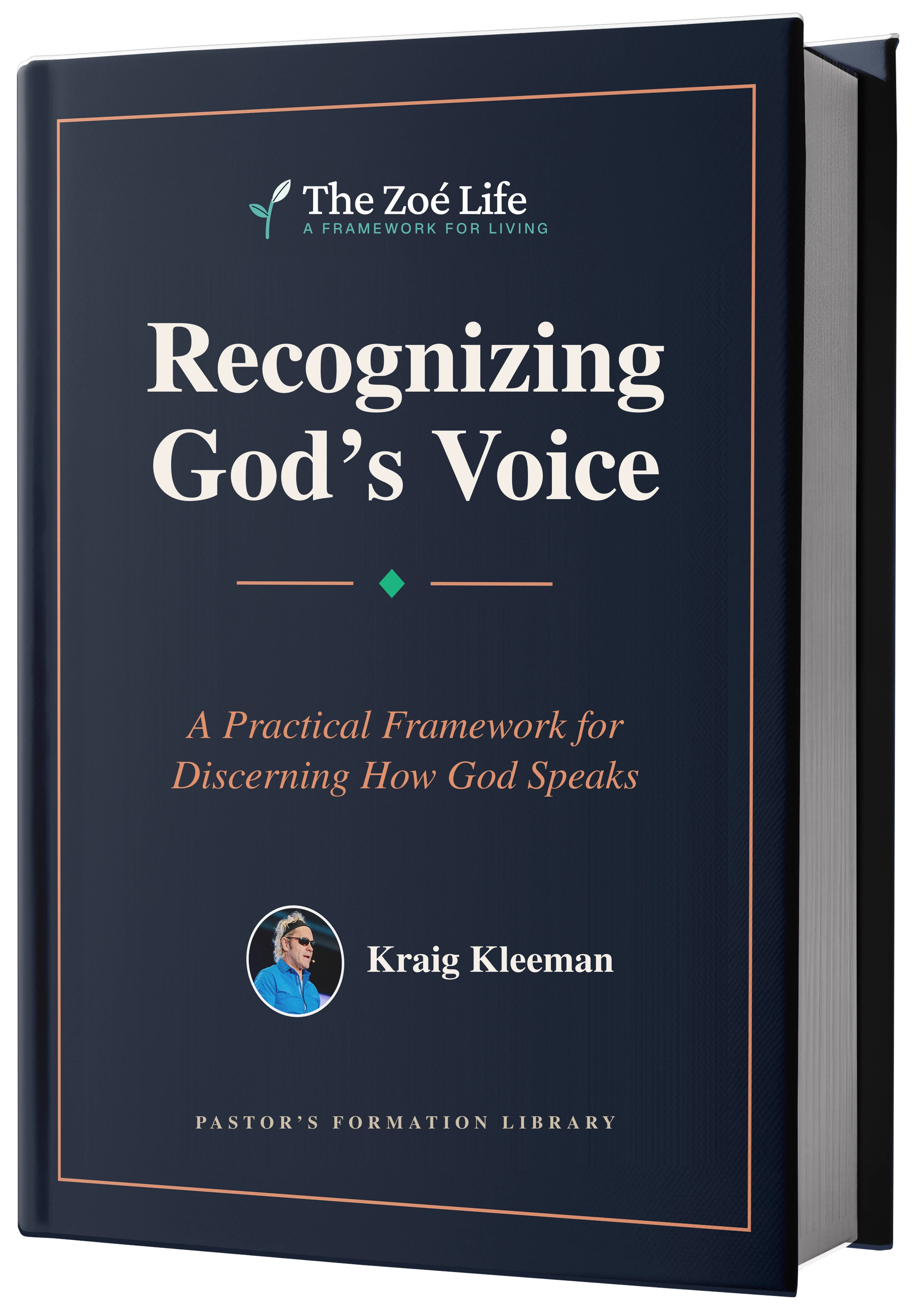
A five-week series for helping your church recognize God's voice, test what it hears, and follow Him.
Includes 69 slides with speaker notes, this guide as a PDF and 4 team handouts.
Start here
How are you using this book?
- Five-week seriesOne Sunday per week, from “God is speaking” to a life that listens.
- One messageA single sermon from 1 Samuel 3 that carries the whole arc.
- Class or small groupFive or six sessions of 60–75 minutes, with discussion built in.
Your first three steps
Download the Preaching & Teaching Kit
Slides, this guide and the handouts in one ZIP. Download it above ↑Read Week 1
and the book sections it lists. Go to Week 1Send your team the handouts
Each one says when to use it. See the handouts
The series
Series at a glance
- Week 1: God Is Speaking1 Samuel 3:1–10 · John 10:27
- Week 2: The Anchor and the ChannelsActs 17:11 · Hebrews 1:1–2
- Week 3: Test It, Then Obey It1 Thessalonians 5:19–21 · James 1:22
- Week 4: When Heaven Seems Quiet1 Kings 19:11–13 · Psalm 13
- Week 5: A Life That ListensIsaiah 30:21 · Revelation 3:20
Five Sundays, from “God is speaking” to a life that listens. Each shows the week's text and response. Select a week to jump to it.
Before the series
Planning checklist
Four weeks out
- Read the book through once, or at least Chapters 1, 3, 6, 8 and 10.
- Meet with staff or group leaders using the Team Discussion Guide.
- Decide who will lead the silence in Week 1 and pray with people in Week 4.
Two weeks out
- Print the Pattern Log for Week 2 and The Six Discernment Tests for Week 3.
- Print The Five-Minute Daily Practice for Week 5.
- Ask two or three people whether they would share how they learned to recognize God's voice.
- Send small-group leaders the five weeks of questions.
The week of each Sunday
- Read that week's “Read before you preach” chapters.
- Choose one illustration from your own church for each prompt you use.
- Prepare a slide with the big idea and the featured line.
Before Week 4
- Arrange people to pray with anyone who feels God has gone quiet.
- Make sure pastoral care is available for anyone grieving or struggling.
Chapters 1–2
Week 1: God Is Speaking
1 Samuel 3:1–10 · John 10:27
This week at a glance
- Big idea
- God speaks because He is relational, not because we have become spiritual enough to earn it. Recognizing His voice is something His people learn, the way Samuel learned it.
- Prepare
- Two minutes of silence planned after the sermon, and someone ready to read 1 Samuel 3:10 aloud into it.
Show full outline for Week 1Hide full outline
Preach it
On the text
- 1 Samuel 3:1 sets the scene: “the word of the Lord was rare in those days; there was no frequent vision.” The rarity was in Israel, not in God's willingness. He speaks into that very silence.
- Verse 7 explains Samuel's confusion: he “did not yet know the Lord, and the word of the Lord had not yet been revealed to him.” He heard correctly three times and still did not recognize who was calling.
- In John 10:27 the verbs run together: “My sheep hear my voice, and I know them, and they follow me.” Hearing belongs to belonging. It is the ordinary life of the flock, not a gift for a few.
Read before you preach
- God speaks because He is relationalChapter 1
- Desire is not the same as recognitionChapter 2
The message
Ask how many in the room have ever wondered whether God was speaking to them and simply could not tell. Then tell Samuel's story: a boy who heard God three times and ran to the wrong person every time.
God speaks because He is relational. · John 10:27 · Ch 1
Samuel heard before he recognized. · 1 Sam 3:4–7 · Ch 2
Wanting to hear is not the same as recognizing. · Ch 2
Recognition is learned, with help. · 1 Sam 3:8–10 · Ch 2
Give people the words Eli gave Samuel. Read 1 Samuel 3:10 slowly, then hold two minutes of silence and let everyone pray it for themselves: “Speak, for your servant hears.”
Where Jesus is in this text
Jesus is the Word made flesh (John 1:14), God speaking in a voice we can hear and a face we can see. The Shepherd who calls His sheep by name (John 10:3) is the same one who came to find them.
Lines from the book
The supernatural was never meant to be rare. It was meant to be relational.
Spiritual maturity begins when desire becomes discernment.
Illustration prompts from your own church
- A time you sensed God speaking and could not tell at first that it was Him.
- Someone like Eli in your life: a person who helped you recognize what God was saying.
- A season when you wanted to hear God badly, and what that wanting taught you.
Lead the response
On Sunday
Speak, for your servant hears
Read 1 Samuel 3:10 aloud, then hold two minutes of silence. Invite everyone to pray Samuel's words for themselves and to write down anything that comes to mind, without needing it to be dramatic.
Take it home · For households
Each evening, ask one another at dinner: “Where might God have been speaking to you today?” Let small answers count.
Small-group questions
- Do you expect God to speak to you, or does it feel like something for other people?
- Who has been an Eli for you, helping you recognize God's voice?
- What is the difference between wanting to hear God and learning to recognize Him?
Bridge · Next week: the anchor every other way God speaks is tested against, and the channels He uses.
Chapters 3–5
Week 2: The Anchor and the Channels
Acts 17:11 · Hebrews 1:1–2
This week at a glance
- Big idea
- God speaks in many ways, but Scripture is the anchor every other way is measured against. When something keeps returning, it may be God underlining what matters.
- Prepare
- A slide or card listing the ways God speaks from Chapter 4, with Scripture first and on its own line.
Show full outline for Week 2Hide full outline
Preach it
On the text
- The Bereans “received the word with all eagerness, examining the Scriptures daily to see if these things were so” (Acts 17:11). Eagerness and examining belong together. Luke calls it noble.
- Hebrews 1:1 says God spoke “at many times and in many ways.” Verse 2 names the fullest way: “in these last days he has spoken to us by his Son.” Every channel points back to Him.
- Joseph tells Pharaoh that the dream was doubled “because the thing is fixed by God” (Genesis 41:32). Repetition in Scripture often marks emphasis, not coincidence.
Read before you preach
- The primary anchor: God's WordChapter 3
- The channels of God's communicationChapter 4
- Patterns, repetition, and divine emphasisChapter 5
The message
Hold up a Bible and a phone. Ask which one people check first in the morning, and which one they trust more when the two disagree.
Scripture is the primary anchor. · Acts 17:11 · Ch 3
God speaks in many ways. · Heb 1:1 · Ch 4
No channel overrides Scripture. · Ch 4
Repetition can be divine emphasis. · Gen 41:32 · Ch 5
Do not leave people suspicious of every impression. End with confidence: because God will never contradict Himself, Scripture is a gift that makes hearing Him safer, not harder.
Where Jesus is in this text
On the road to Emmaus, Jesus “interpreted to them in all the Scriptures the things concerning himself” (Luke 24:27), and their hearts burned. The living Word opens the written Word.
Lines from the book
God will never contradict Himself.
Repetition can function like divine underlining.
Illustration prompts from your own church
- A time Scripture corrected something you were sure God had told you.
- A verse, theme or burden that kept returning to you until you paid attention.
- Someone in your church whose love for Scripture made their discernment trustworthy.
Lead the response
On Sunday
What keeps returning?
Give people a quiet minute to write down one thing that has kept returning to them lately: a verse, a burden or a conviction. Then hand out the Pattern Log and invite them to start it this week.
Take it home · For households
Read one short passage together each day this week. Ask each person: “What stood out to you?” Notice if anything repeats.
Small-group questions
- How do you usually decide whether something is from God?
- Which of the ways God speaks feels most familiar to you? Which feels strange?
- What has kept returning to you lately, and what might God be underlining?
Bridge · Next week: how to test what you hear, and why obeying what is already clear opens the way to more.
Chapters 6–7
Week 3: Test It, Then Obey It
1 Thessalonians 5:19–21 · James 1:22
This week at a glance
- Big idea
- Testing is not doubt. It is how God protects what He says. And the clearest way to hear more is to obey what He has already made clear.
- Prepare
- Copies of The Six Discernment Tests for everyone.
Show full outline for Week 3Hide full outline
Preach it
On the text
- 1 Thessalonians 5:19–21 holds three commands together: “Do not quench the Spirit. Do not despise prophecies, but test everything; hold fast what is good.” Paul guards against both cynicism and gullibility.
- James 1:22 warns against being “hearers only, deceiving yourselves.” Hearing without doing is not neutral. James says it is self-deception.
- In John 7:17 Jesus ties knowing to willing: “If anyone's will is to do God's will, he will know whether the teaching is from God.” Obedience is a way of knowing.
Read before you preach
- Testing what you hearChapter 6
- The role of obedienceChapter 7
The message
Ask the room: “What has God already made clear to you that you have not yet done?” Let the question sit in silence before you say anything else.
Do not quench, and do not swallow whole. · 1 Thess 5:19–21 · Ch 6
Testing protects revelation. · Ch 6
Hearing is completed by doing. · James 1:22 · Ch 7
Obedience opens the way to more light. · John 7:17 · Ch 7
Hand out The Six Discernment Tests and walk through them briefly. Then return to the opening question and invite one act of obedience this week.
Where Jesus is in this text
Jesus said, “I have come down from heaven, not to do my own will but the will of him who sent me” (John 6:38). The Son who heard the Father perfectly also obeyed Him perfectly, even to the cross.
Lines from the book
Testing does not weaken revelation. Testing protects revelation.
God often gives more light to those who obey the light they already have.
Illustration prompts from your own church
- A time you acted on an impression without testing it, and what you learned.
- Someone who helped you test a word or a decision with humility.
- An act of simple obedience that was followed by greater clarity.
Lead the response
On Sunday
One clear thing
Give everyone The Six Discernment Tests. Invite each person to write down one thing God has already made clear and one step of obedience they will take this week.
Take it home · For households
Each person names one thing God has already made clear, and the household checks in on it by the end of the week.
Small-group questions
- Which of the six tests do you most often skip?
- Why might testing feel like doubt? Why is it actually faith?
- What has God already made clear that you have not yet obeyed?
Pastoral note: Some people have been hurt by others who said “God told me.” Name that gently, and present testing as protection for them, not suspicion of them.
Bridge · Next week: what to do when heaven seems quiet, and how to handle dreams and impressions with wisdom.
Chapters 8–9
Week 4: When Heaven Seems Quiet
1 Kings 19:11–13 · Psalm 13
This week at a glance
- Big idea
- Seasons of silence are not proof that God has left. He may be training our capacity to listen. And dreams and impressions, real as they are, must be governed by Scripture.
- Prepare
- Someone ready to pray with people who feel God has gone quiet.
Show full outline for Week 4Hide full outline
Preach it
On the text
- Elijah expected God in the wind, the earthquake and the fire. After them came “the sound of a low whisper” (1 Kings 19:12). God met an exhausted prophet quietly.
- Psalm 13 begins “How long, O Lord? Will you forget me forever?” and ends “I will sing to the Lord, because he has dealt bountifully with me.” Nothing in the circumstances changes between the two. The psalmist keeps talking to God.
- Joseph and Daniel both said interpretation belongs to God (Genesis 40:8; Daniel 2:28). Dreams in Scripture are never interpreted apart from Him.
Read before you preach
- When God seems silentChapter 8
- Dreams, impressions, and the need for wisdomChapter 9
The message
Describe Elijah under the broom tree (1 Kings 19:4): a prophet who had seen fire fall from heaven, now asking to die. Ask who in the room has felt God go quiet right after something great.
God was not in the wind, the quake or the fire. · 1 Kings 19:11–12 · Ch 8
Silence can be training. · Ch 8
Honest lament is still prayer. · Ps 13 · Ch 8
Dreams get attention; Scripture governs meaning. · Ch 9
Read Psalm 13 aloud as the church's prayer. Invite anyone in a quiet season to stand or raise a hand, and ask people nearby to pray for them.
Where Jesus is in this text
On the cross Jesus prayed Psalm 22: “My God, my God, why have you forsaken me?” (Mark 15:34). He has been in the silence, and He did not stop calling God “my God.”
Lines from the book
Heaven may feel silent when God is training your capacity to listen.
A dream may get your attention, but Scripture must govern your interpretation.
Illustration prompts from your own church
- A season when God seemed silent, and what you learned in it, told without making it sound easy.
- A dream or impression you had to hold carefully until Scripture and counsel made sense of it.
- Someone who kept praying honestly through a long silence.
Lead the response
On Sunday
Praying in the quiet
Read Psalm 13 together as a church. Invite those in a quiet season to stand, and ask those around them to pray. Close by reading 1 Kings 19:12 and giving one minute of silence.
Take it home · For households
Read Psalm 13 together once this week. Ask: “Where does it feel quiet for you right now?” Pray for one another without trying to fix it.
Small-group questions
- When has God felt silent to you? What did you do in that season?
- What noise in your life might make His voice harder to hear?
- How do you handle a dream or impression that seems significant?
Pastoral note: Some in the room are grieving or depressed. Do not suggest that silence is always their fault or always a lesson. Make room for lament, and point people to pastoral care.
Bridge · Next week: building a life that listens, the mistakes to avoid, and the Person the voice leads to.
Chapters 10–12
Week 5: A Life That Listens
Isaiah 30:21 · Revelation 3:20
This week at a glance
- Big idea
- Hearing God is not a crisis skill. It grows through a daily rhythm, matures into faithfulness, and leads us to the Person who is speaking.
- Prepare
- Copies of The Five-Minute Daily Practice for everyone, and a prayer of sending.
Show full outline for Week 5Hide full outline
Preach it
On the text
- Isaiah 30:21 promises a voice “behind you, saying, ‘This is the way, walk in it,’ when you turn to the right or when you turn to the left.” The voice is for ordinary walking, not only for crossroads.
- In Revelation 3:20 Jesus says, “I stand at the door and knock. If anyone hears my voice and opens the door, I will come in to him and eat with him.” The goal of hearing is a shared table.
- Revelation 3:20 is spoken to a church, Laodicea, not to unbelievers. Jesus is knocking on the door of people who already know His name.
Read before you preach
- Building a personal hearing God rhythmChapter 10
- Common mistakes in hearing GodChapter 11
- Living with relational clarityChapter 12
The message
Ask how many people only pray hard for guidance when a big decision is coming. Then ask what it would be like to know someone's voice only in emergencies.
Build a rhythm, not a crisis habit. · Isa 30:21 · Ch 10
Avoid the common mistakes. · Ch 11
Become faithful, not mystical. · Ch 11
The voice leads to the Person. · Rev 3:20 · Ch 12
Hand out The Five-Minute Daily Practice and walk through its five steps. Then read Revelation 3:20 and send the church out to open the door every day.
Where Jesus is in this text
The voice was always about the Person. Jesus does not offer information from a distance. He offers Himself: “I will come in to him and eat with him, and he with me.”
Lines from the book
Discernment grows through repeated attention, not occasional crisis prayer.
The goal is not to become more mystical. The goal is to become more faithful.
The voice of God is not an end in itself. The voice leads to the Person.
Illustration prompts from your own church
- A daily habit that has helped you hear God more steadily.
- One of the common mistakes from Chapter 11 you have made, told honestly.
- A moment when hearing God led you closer to Jesus Himself, not only to an answer.
Lead the response
On Sunday
Five minutes a day
Give everyone The Five-Minute Daily Practice and walk through its five steps together. Invite each person to choose the time of day they will keep it for the next seven days, then pray a prayer of sending.
Take it home · For households
Try the Five-Minute Daily Practice together once this week, at breakfast or bedtime. Share one sentence each.
Small-group questions
- What rhythm, however small, will you keep for the next seven days?
- Which common mistake in hearing God do you most need to watch for?
- Looking back on this series: how has your expectation of hearing God changed?
Bridge · Close by reading the book's own line and let the church leave holding it: “The voice of God is not an end in itself. The voice leads to the Person.”
One-message version
“Speak, for Your Servant Hears”
1 Samuel 3:1–21
Big idea
God is still speaking. Like Samuel, we learn to recognize His voice with help, test what we hear, and answer with obedience.
The word was rare, but God was not silent. · 1 Sam 3:1–4 · Ch 1
Samuel heard before he recognized. · 1 Sam 3:5–7 · Ch 2–5
Eli helped him test what he heard. · 1 Sam 3:8–9 · Ch 6
Speak, for your servant hears. · 1 Sam 3:10 · Ch 7–9
The Lord was with him and let none of his words fall. · 1 Sam 3:19–21 · Ch 10–12
The supernatural was never meant to be rare. It was meant to be relational.
Pick one illustration from your own church for movement 2 and one for movement 3; those two carry the message. Movement 3 is where you name Scripture and community as the tests, then give the response below before the final song.
Response
Speak, Lord
Read 1 Samuel 3:10, then give two minutes of silence. Invite each person to pray Samuel's words and write down one thing God has already made clear that they will obey this week.
Class version
Teaching this as a class
Use Weeks 1–5 as five sessions of 60–75 minutes. Ask the class to read the matching chapters before each session. Every session follows the same rhythm:
Open with a story
10 min · One person shares a time they sensed God speaking, or a step they took last week.
Read the text
10 min · Read the week's passage aloud, then once more slowly.
Teach
20 min · Work through the week's outline and lines from the book.
Discuss
20 min · Use the small-group questions. Let quieter people answer first.
Practice
10 min · Try the week's response, or plan when to do it this week.
Optional session 6 · Practice week
Have everyone keep The Five-Minute Daily Practice and their Pattern Log for one week, then spend the final session sharing and testing what stood out.
Leadership sidebar · For staff and elders before the series
Leading a Church That Listens
A series on hearing God will stir questions, stories and some confusion. Before it starts, spend one meeting with your staff or elders on Chapters 3, 6 and 11 so you can answer with one voice.
The goal is not to become more mystical. The goal is to become more faithful.
Expecting God to speak
Do our people believe God speaks to them, or only to leaders and gifted few?
Testing with humility
When someone says “God told me,” do we have a safe, biblical way to test it together?
Caring in the silence
Who in our church feels God has gone quiet, and who is walking with them?
Handouts for your team
- Staff & leadersTeam Discussion GuidePDF: download Team Discussion Guide
Staff or group leaders: read the book together before the series starts.
- PDF: download Pattern Log
- PDF: download The Six Discernment Tests
- PDF: download The Five-Minute Daily Practice
Three months later
After the series
About three months after Week 5, gather your leaders again and ask:
- Who is still keeping the Five-Minute Daily Practice, or a rhythm like it?
- What patterns have people noticed in their logs, and how were they tested?
- How has the way we talk about hearing God changed, in groups, prayer and decisions?
About this guide
A guide, not a manuscript
Each week gives you a text, a big idea and an outline, then gets out of the way so you can do your own study and preach in your own voice. The best illustrations will come from the people in your church, not from this page, so the prompts point you there.
Lines marked Lines from the book are quoted word for word from Recognizing God's Voice, and the handouts carry the book's own tests, log and daily practice. Everything else, including the series title, Scripture choices, notes on the text, openings, outlines, prompts, take-homes and questions, was prepared for this guide. Each week lists the chapters to read before you preach; they will give you far more than this guide can.